

Encyclopedia of Casino Table Games: Rules, History, and Mathematics
Learn more
📖 ENCYCLOPEDIC RESOURCE
Why choose us?
Welcome. This is an authoritative information resource dedicated to the world of classic casino games.
Here you will find detailed academic descriptions: from poker and blackjack rules to the history of roulette and baccarat.
Here you will find detailed academic descriptions: from poker and blackjack rules to the history of roulette and baccarat.
Intellectual leisure
We do not organize real-money games — our site is built for deep understanding, strategic thinking, and respect for gaming culture. Knowledge without risk.
Academic approach
Complete rules of poker, blackjack, baccarat, mathematical breakdowns, the history of roulette, and the origins of cards. Reliable, structured, and verified.
Mathematical logic
From probability distributions to payout coefficients. We reveal the statistics behind each game, helping you think rationally and analytically.
🔍 Why our resource? Because we transform the chaos of gambling into a structured encyclopedia of knowledge. Every article is the result of research from primary sources, historical documents, and classic game theory textbooks. Roulette, blackjack, baccarat, and poker are presented without myths — only verified logic and academic rigor.
🎓 Our readers include students, mathematics teachers, professional players (strictly for informational purposes), and curious minds who value depth over shallow advice. We explain the "rule of three" in baccarat, the history of the zero in roulette, and the mathematical foundation of card counting in blackjack — exclusively for educational purposes.
«Knowing the rules and probabilities is the foundation of responsible gaming»
🎯
Responsible gaming principles
This encyclopedic resource adheres to the principles of responsible gaming. All information is provided for informational and educational purposes only and is intended for individuals aged 18 or older. We do not accept bets or conduct any real-money gambling activities. Our mission is education and intellectual enlightenment.
This encyclopedic resource adheres to the principles of responsible gaming. All information is provided for informational and educational purposes only and is intended for individuals aged 18 or older. We do not accept bets or conduct any real-money gambling activities. Our mission is education and intellectual enlightenment.
📐 Mathematical strategies & payout rates — detailed analysis of expected value, variance, and optimal decisions in Blackjack, Poker, and European Roulette.
Explore thematic sections →
🃟 For a deeper understanding of game logic and probability calculations, navigate to the corresponding thematic sections of our site.
Explore game mathematics
Poker is not a lottery!
Poker is more than just cards
Poker rules are a deep mathematical discipline with elements of psychology. There are many variations, but we highlight three pillars that everyone should know.
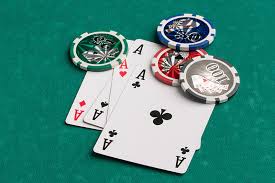
Three types of poker
♠️ AI × POKER · Texas Hold'em & Beyond
Poker & Artificial Intelligence
How modern neural networks, reinforcement learning, and GTO strategies turn poker into a mathematical battle.
Learn how to win more often using AI-powered methods.
Reinforcement Learning
AI plays billions of hands against itself (self-play), discovering unexploitable strategies. Libratus and Pluribus are legendary bots that defeated pro players.
- ✅ Adapts to opponent tendencies
- ✅ Balances bluffs and value bets
- ✅ Minimizes exploitability
GTO Approach
Game Theory Optimal — mathematically balanced strategies that AI computes instantly. Makes your play unpredictable and robust.
- 🎯 Bluff frequency: pot-odds ratio (e.g., 2:1)
- 🎯 Optimal bet sizing for max EV
- 🎯 Range protection & equity realization
Real-Time Analysis
AI solvers (PioSOLVER, GTO+, Monker) help post-game, but modern systems can recommend decisions in milliseconds.
- 📊 Outs & pot odds calculation
- 📊 Opponent range estimation
- 📊 Optimal sizing strategies
🎯 How to Use AI to Win at Poker
AI doesn't guarantee 100% wins (luck still matters), but it gives a massive edge in the long run. Here are 5 concrete steps to apply AI methods:
1️⃣ Learn GTO balance
Use solvers to analyze hands and plug leaks.
Use solvers to analyze hands and plug leaks.
2️⃣ AI tracking software
Platforms like PokerTracker, DriveHUD collect stats, AI spots patterns.
Platforms like PokerTracker, DriveHUD collect stats, AI spots patterns.
3️⃣ Training simulations
Play against adaptive AI bots with adjustable difficulty.
Play against adaptive AI bots with adjustable difficulty.
4️⃣ Opponent modeling
Machine learning classifies loose/tight/aggressive players, suggesting exploits.
Machine learning classifies loose/tight/aggressive players, suggesting exploits.
5️⃣ Emotional control
AI never tilts — use HUD insights to stay disciplined.
AI never tilts — use HUD insights to stay disciplined.
🏆 AI Revolution proof & records
>1 Billion
hands played by Libratus vs humans
147 BB/100
Pluribus profit in 6-max (per hour)
-9.5 BB/100
average loss of pros vs Libratus
≤0.5%
exploitability of modern GTO bots
🤖 Algorithms That Make AI Unstoppable
🔹 Counterfactual Regret Minimization (CFR+)
The core algorithm for solving imperfect-information games. Iteratively reduces “regret” for suboptimal actions. CFR+ powered DeepStack and Libratus to compute Nash equilibrium in real time.
🔹 Neural Network Range Approximation
Deep LSTM networks analyze bet sequences and predict opponent hand distributions. Advanced poker AIs use convolutional nets to detect betting patterns.
🔹 Adaptive Learning (Exploitation)
Hybrid systems — GTO as a baseline, but when the opponent shows a leak, AI deviates to maximum exploitation. Example: if an opponent never bluffs, AI folds marginal hands.
📈 How to Apply AI Techniques Without a Supercomputer
🃏 Solver software for training
Use poker solvers (PioSOLVER, GTO+, or free FlopZilla) to analyze complex spots. Upload your hand histories — AI shows optimal lines.
💡 Tip: Study c-bet frequencies on different board textures — solvers give exact %.
🎛️ HUD with ML analytics
PokerTracker 4 + Hand2Note use Bayesian algorithms to classify player types (NIT, LAG, calling station). Exploit opponents' mistakes systematically.
✅ Example: If opponent has low WTSD (went to showdown), bluff them more often.
📱 AI challenge: Play vs Neural Nets
Platforms like “Poker RL” or “DeepStack Demo” let you play against neural networks. Trains you to think in ranges and avoid predictable patterns.
📐
The Mathematics of Winning: Expectation & Variance
AI doesn't eliminate luck in a single hand, but it turns poker into a positive expectation game. With even a +3-5 BB/100 win rate, an AI-assisted player crushes the long run over 50k+ hands. The secret: a GTO baseline plus exploitation of non-optimal opponents.
EV = Σ (Outcome Probability × Win Amount) — (Call Cost). AI selects the action with maximum expectation given opponent ranges.
⚠️ The Ethical Line regulations
🚫 Real-time AI assistance is banned
Almost all online rooms (PokerStars, GG Poker, Partypoker) forbid software that makes real-time decisions. Using bots or live solvers leads to permanent bans.
✅ Legal ways to use AI
Offline hand history analysis, solver training, studying AI strategies through courses. Use AI ideas for self-improvement, not cheating.
🧠 Future of poker: Hybrid Intelligence
World-class players learn from AI, then adapt styles for human opponents. Human intuition + machine precision = new era.
❓ Frequently Asked Questions
🔥 Can AI always win at poker?
No, due to variance, even the strongest AI can lose a short session. But over hundreds of thousands of hands, AI beats any human consistently.
🎓 Do I need to know programming to use AI strategies?
Not necessarily. Mastering poker solvers (user-friendly) and HUD stats is enough. For deeper understanding — basic regret matching principles help.
🏆 Best public AI bot for learning?
Pluribus (by Facebook AI) is available for research, also "Poker AI Trainer" on Steam is great. They demonstrate GTO lines perfectly.
💡 Bottom Line: How to Win with AI
✔️ Study GTO ranges via solvers → become unpredictable.
✔️ Analyze hand histories with AI software, find leaks.
✔️ Ask yourself "what would AI choose" in tough spots (bluff/value).
✔️ Never violate room rules — use AI only for learning and post-game review.
✔️ Combine AI logic with live reads — become a top-tier player.
📌 "Poker is no longer a game of pure luck — it's a battlefield of mathematical algorithms. Arm yourself with AI knowledge and dominate the tables."
♢ TEXAS HOLD'EM ♤
The king of poker variants — complete rules, hand rankings, and strategy
🎴 Core Concept of the Game
Texas Hold'em is the world’s most popular poker variant. Each player is dealt 2 private cards (hole cards), then 5 community cards are placed on the board. The goal is to make the strongest five-card poker hand using any combination of the 7 available cards (2 hole + 5 community), or to force opponents to fold through strategic betting.
The player with the best hand according to standard poker hand rankings wins. Hold'em involves not just card strength but also betting strategy, psychology, and bankroll management.
🧩 Hand Rounds (Betting Streets)
The game is played with 2 to 10 players. Each deal consists of four betting rounds:
🔹 Preflop
After receiving two hole cards, the first betting round begins.
After receiving two hole cards, the first betting round begins.
🔸 Flop
3 community cards are revealed. Second betting round.
3 community cards are revealed. Second betting round.
🔹 Turn
The fourth community card. Third betting round.
The fourth community card. Third betting round.
🔸 River
The fifth and final community card. Final betting round.
The fifth and final community card. Final betting round.
In each round, players can: , , , , or . If two or more players remain after the river, a showdown occurs.
Forced bets: Small Blind (SB) and Big Blind (BB) create the initial pot.
🃏 Hole Cards & Community Board
Each player receives 2 private hole cards that only they can see. The board develops with 5 face-up community cards in stages: flop (3 cards), turn (1), river (1).
Each player makes the best five-card hand from the seven available cards (2 hole + 5 community). You can use 0, 1, or both of your hole cards. For example, if you hold pocket aces and the board shows an ace, you use both hole cards for three of a kind.
⭐ Important: Suits have no rank value except when forming a flush. All hands follow a strict hierarchy.
⚙️ Actions & Key Terminology
Fold
Check
Bet
Call
Raise
All-in
Blinds
Pot
Side Pot
Showdown
Kicker
Kicker — the highest card not part of the main combination. If two players have the same pair, the higher kicker wins (then second kicker, etc.).
Position at the table is critical: late position (button/cutoff) provides a strategic advantage by acting after most opponents.
🏆 Hand Rankings (strongest to weakest)
- 🔹 Royal Flush — A, K, Q, J, 10 of the same suit. The unbeatable hand.
- 🔸 Straight Flush — five consecutive cards of the same suit (e.g., 9♠ 8♠ 7♠ 6♠ 5♠).
- 🔹 Four of a Kind — four cards of the same rank (e.g., J♥ J♦ J♣ J♠).
- 🔸 Full House — three of a kind + a pair (e.g., K♣ K♦ K♥ 5♠ 5♣).
- 🔹 Flush — five cards of the same suit, any order.
- 🔸 Straight — five consecutive cards of different suits (Ace can be high or low).
- 🔹 Three of a Kind (Set/Trips) — three cards of the same rank.
- 🔸 Two Pair — two different pairs (e.g., Q♣ Q♦ 8♥ 8♠).
- 🔹 One Pair — two cards of the same rank.
- 🔸 High Card — no made hand, highest card(s) determine winner.
⭐ When hands are equal, the pot is split. For straights and flushes, compare the highest card; for a full house, compare the three-of-a-kind rank first, then the pair. Remember: suits have no rank.
📌 Example showdown: Both players have a pair of Queens. First player's kicker is a King, second's kicker is a Jack. First player wins. If kickers are equal, compare the next card.
🎲 Hand Example Walkthrough
1. Preflop: Each player gets 2 cards. Betting starts after the big blind.
2. Flop: Dealer burns one card and deals 3 community cards. Second betting round.
3. Turn: The 4th community card is added. Third betting round.
4. River: The 5th community card. Final betting round.
5. Showdown: Remaining players reveal cards. Best five-card hand wins.
If a player bets and all others fold, that player wins the pot without showdown.
🧠 Strategy & Key Concepts
📊 Position is Power
Late position (button, cutoff) allows you to see opponents' actions before deciding, giving a massive advantage. Early position requires stronger hands to enter the pot.
🎯 Starting Hand Selection
Not all hole cards are equal. The best: pocket Aces (AA), Kings (KK), Queens (QQ), and suited connectors like AKs, AQs. Play aggressively with high-card combinations preflop.
💰 Pot Odds & Math
Pot odds compare the current pot size to the cost of a call. Counting outs (cards that improve your hand) is crucial. For example, a flush draw on the flop has ~35% chance to complete by the river.
🎭 Bluff & Semi-Bluff
Texas Hold'em is a game of incomplete information. Bluffing allows you to win pots without a strong hand. A semi-bluff (betting with a drawing hand) gives two ways to win: opponents fold, or you complete your draw.
🎖️ Game Variants: Limit Hold'em (fixed bet sizes), Pot-Limit Omaha (different game). However, Texas Hold'em is most commonly played as No-Limit — no maximum bet (you can go all-in at any time). No-Limit Hold'em is the format used in the World Series of Poker (WSOP) Main Event and major tours.
🏅 Hand Rankings Reference Table
| Hand | Example | Notes |
|---|---|---|
| Royal Flush | A♠ K♠ Q♠ J♠ 10♠ | Unbeatable hand |
| Straight Flush | 9♥ 8♥ 7♥ 6♥ 5♥ | Highest top card wins |
| Four of a Kind | 10♣ 10♦ 10♥ 10♠ A♣ | Compare quads, then kicker |
| Full House | 7♣ 7♦ 7♠ 2♥ 2♣ | Compare trips first |
| Flush | A♦ J♦ 9♦ 6♦ 3♦ | Highest card decides |
| Straight | 8♣ 7♦ 6♥ 5♠ 4♣ | Ace can be low (A-2-3-4-5) |
| Three of a Kind | Q♠ Q♦ Q♥ K♣ 9♠ | Higher set wins |
| Two Pair | J♣ J♠ 5♦ 5♥ A♠ | Higher pair → lower pair → kicker |
| One Pair | 9♠ 9♥ K♦ 8♣ 2♠ | Kickers decide |
| High Card | A♣ 10♠ 8♦ 6♥ 4♣ | Compare descending cards |
📌 Note: A-2-3-4-5 is the "wheel" straight (Ace low). The lowest straight flush is 5♥4♥3♥2♥A♥.
🎲 Tournament vs. Cash Game Formats
In cash games, chips have real cash value, and you can rebuy at any time. In tournaments, players pay a buy-in, receive a starting stack, and play until one player accumulates all chips. Blinds increase over time, adding pressure and dynamics. Texas Hold'em is the foundation of every major poker room worldwide.
Most famous tournaments: WSOP Main Event, EPT, WPT. The rules are universal, though blind structures and antes may vary.
♢ OMAHA POKER ♤
Omaha Hold’em — The dynamic 4-card poker variant
📜 Rules of the Game
🎴 Deal & Structure
Each player receives 4 hole cards (private). Then, 5 community cards are dealt in three stages: flop (3 cards), turn (1 card), river (1 card).
Critical rule: You must use exactly 2 cards from your hand + exactly 3 cards from the board to make the best possible five-card poker hand.
🔄 Betting Rounds
✔ Preflop (before community cards)
✔ Flop (after first 3 board cards)
✔ Turn (after 4th board card)
✔ River (after 5th board card)
✔ Showdown (hands revealed and compared)
Pot-Limit Omaha (PLO) is the most popular format.
🧩 Key Differences from Texas Hold'em
➜ 4 starting cards instead of 2.
➜ Strictly 2 from hand + 3 from board — you cannot use 1 or 3+ hole cards.
➜ Much stronger hands on average due to more combinations.
➜ "The nuts" (best possible hand) is a central concept.
⚡ The "2+3" rule is absolute — even if you hold four cards of the same suit, you must combine exactly two of them with three community cards to form a flush. Draws need board connectivity.
🏆 Poker Hand Rankings (Highest to Lowest)
Hand rankings in Omaha are identical to standard poker. However, due to the 2+3 rule, some hands occur more frequently. Recognizing the nuts is crucial.
| Hand | Description | Example |
|---|---|---|
| 🌟 Royal Flush | Ten-to-ace straight, all same suit | A♠ K♠ Q♠ J♠ 10♠ |
| 💎 Straight Flush | Any five consecutive cards of the same suit | 9♥ 8♥ 7♥ 6♥ 5♥ |
| 🔺 Four of a Kind | Four cards of the same rank | J♣ J♦ J♥ J♠ + any |
| 🏠 Full House | Three of a kind + a pair | 8♣ 8♦ 8♠ 4♥ 4♣ |
| 💧 Flush | Any five cards of the same suit | A♦ 10♦ 7♦ 4♦ 2♦ |
| 📏 Straight | Five consecutive ranks | 10♠ 9♣ 8♥ 7♦ 6♠ |
| 🥉 Three of a Kind | Three cards of the same rank | Q♠ Q♦ Q♣ 5♥ 2♦ |
| 📸 Two Pair | Two different ranks, each with a pair | K♠ K♦ 7♣ 7♥ 3♠ |
| ⚡ One Pair | Two cards of the same rank | 10♠ 10♣ A♠ 8♦ 4♥ |
| 🥇 High Card | No made hand | A♣ K♦ 9♠ 6♥ 2♣ |
Note: In Omaha, multiple players often make strong hands — the best kicker or a split pot may decide the winner.
🧠 Omaha Strategy Guide (PLO Focus)
1️⃣ Starting Hand Selection
Play only connected and coordinated hands. Strong starting combinations: double pairs (KKQQ), suited cards with straight potential (A♥ K♥ Q♥ J♥), and run-downs like 9♦ 10♠ J♣ Q♦. Avoid "disconnected" garbage hands.
Premium: A A K K (double-suited) | A K Q J suited
2️⃣ Position is Everything
Position matters even more in Omaha than in Hold'em. Late position (button, cutoff) allows you to play more hands and gather information. Early position requires a very tight approach.
3️⃣ Playing Draws
Omaha is a game of draws. Strong draws (flush + straight draws, wrap straight draws with a pair) have massive potential. Count your outs — you can often have 15+ outs to improve. But remember card removal: opponents' cards may reduce your chances.
🧠 Golden rule of Omaha strategy: "Play the nuts or the strongest draw to the nuts." If you don't have the best possible flush or the best possible straight, be cautious with big bets. In Omaha, opponents often complete extreme hands.
🎯 Common Beginner Mistakes
- Playing too many hands (VPIP > 30% in PLO)
- Overvaluing "naked" pocket aces without coordination
- Forgetting the 2+3 rule and trying to use 1 hole card
- Calling big bets with weak flush draws
- Ignoring blockers (your cards reduce opponents' possible combos)
📈 Advanced Concepts
- Pot control: With mediocre hands, avoid inflating the pot.
- Bluffing in Omaha: Harder due to hand strength, but possible on scary boards (e.g., three-flush or three-straight).
- Split-pot potential: In Omaha Hi/Lo, always evaluate low possibilities.
- Aggression on the flop: Raising is often better than calling when you hold a strong draw.
💡 Example Hand Walkthrough
EXAMPLE Your hand: A♥ K♥ Q♦ J♦ Board on river: 10♥ 9♥ 3♠ 5♥ 2♣
You must use exactly 2 cards from your hand + 3 from the board. Options: Use A♥ K♥ + board cards 10♥ 9♥ 5♥ → Ace-high flush. This is the nut flush (best possible flush) because you hold the A♥. If you didn't have the A♥, another player with A♥ would beat you. Important: You cannot use 4 hearts from your hand — only two are allowed.
Alternative: Straight? With Q♦ J♦ + board 10♥ 9♥ 3♠ does not make a straight. So you play the flush. In Omaha, always evaluate all possible hand combinations.
🔍 Popular Omaha Formats
Pot-Limit Omaha (PLO) — The most famous variant. Maximum action and drama.
✔ Betting is limited by the current pot size.
✔ Betting is limited by the current pot size.
Omaha Hi/Lo (8 or better) — The pot is split between the best high hand and the best low hand (low must be 8-high or lower).
✔ Requires separate study.
✔ Requires separate study.
Fixed Limit Omaha — Fixed bet sizes, less bluffing, more math-driven.
⚠️ Critical reminder: You can never use exactly one card from your hand, nor three or four. Violation makes your hand invalid. Always — 2 from hand + 3 from board.
♢ DRAW POKER ♤ (Classic Five-Card Draw)
strategy · bluff · card exchange · timeless poker classic
🎴 Draw Poker (Five-Card Draw) is one of the most iconic and pure forms of poker. Each player receives a closed hand of 5 cards and gets the chance to discard and replace from 1 to 5 cards after the first betting round. The goal: make the best five-card combination or force opponents to fold through smart betting and bluffing.
✨ Key feature: After the deal and initial betting, players can “draw” (discard unwanted cards) and receive the same number of new cards from the deck. Then follows a final betting round and showdown. The blend of simple rules with deep strategic play makes Draw Poker a favorite in home games and casinos worldwide.
🎯 Objective
- Win the pot (all bets) either by having the strongest hand at showdown or by forcing all opponents to fold before the final reveal.
- Hands are ranked according to standard poker hierarchy (from Royal Flush down to High Card).
- In Draw Poker, bluffing is essential – you can bet aggressively even with a weak hand to represent strength.
📜 Basic Mechanics
- Ante (initial contribution): Before the deal, every player posts a small mandatory bet to create the starting pot.
- The Deal: Each player receives 5 private cards (face down).
- First Betting Round: Players bet, raise, check, or fold.
- The Draw (card replacement): Remaining players select any number of cards (0 to 5) to discard and receive the same number of fresh cards from the top of the deck.
- Second Betting Round: Final betting action, then the showdown.
- Showdown: Best 5-card combination wins the pot. Ties split the pot equally.
♻️ Step-by-Step Play
- Ante & Deal: Everyone posts the ante. The dealer gives 5 cards face down to each player.
- Pre-Draw Betting: Action starts with the player to the dealer’s left (bet or check). Betting proceeds clockwise. Options: call, raise, fold. If only one player remains, they win the pot immediately.
- ♢ The Draw (Replace cards): Each active player announces how many cards they wish to discard (0 to 5). Discards go into a separate pile. The player receives the same number of new cards from the deck.
- Post-Draw Betting: Another betting round begins (first active player left of dealer). Check, bet, raise, or fold.
- Showdown: If two or more players remain, all reveal their hands. The highest-ranking hand takes the pot.
🔹 Draw rules note: Most versions allow discarding 0, 1, 2, 3, 4, or 5 cards. Some casual games discourage discarding exactly 4 cards (house rule), but standard draw poker allows any number from 1 to 5 (and zero means standing pat). 5-card discard = completely new hand.
🏆 Poker Hand Rankings (Highest to Lowest)
| Hand | Description | Example |
|---|---|---|
| Royal Flush | 10, Jack, Queen, King, Ace of the same suit | ♠10 ♠J ♠Q ♠K ♠A |
| Straight Flush | Five consecutive cards of the same suit | ♥9 ♥10 ♥J ♥Q ♥K |
| Four of a Kind | Four cards of the same rank | ♦7 ♣7 ♥7 ♠7 ♣2 |
| Full House | Three of a kind + a pair | ♣K ♠K ♥K ♣8 ♠8 |
| Flush | Five cards of the same suit (not consecutive) | ♣3 ♣6 ♣9 ♣J ♣A |
| Straight | Five consecutive cards (Ace can be low or high) | ♥5 ♦6 ♣7 ♠8 ♥9 |
| Three of a Kind | Three cards of the same rank | ♦4 ♠4 ♥4 ♣Q ♠10 |
| Two Pair | Two different pairs | ♣J ♠J ♥8 ♦8 ♣A |
| One Pair | Two cards of the same rank | ♠10 ♥10 ♣5 ♦2 ♠K |
| High Card | No combination, highest card wins | ♣A ♥8 ♦5 ♠2 ♣7 (Ace high) |
⭐ When hands are identical, compare kickers (side cards). If everything is equal, the pot is split equally.
🧠 Strategy & Tactics
- Aggressive drawing: If you have four cards to a flush or straight after the deal, discard one card. With a pair or two pairs, discard the rest.
- Bluffing in Draw Poker: Discard only 1 card (representing a strong made hand) while holding garbage – then bet/raise aggressively after the draw.
- Position matters: Players in late position see opponents' actions, gaining an edge in evaluating hand strength.
- Read the draws: Opponent discards 3 cards → likely had a pair. Discards 1 card → possible straight/flush draw or two pair. Stands pat (0 discards) → very strong hand (full house or better).
- Bankroll management: Draw poker can be volatile – control your bet sizes.
🎲 Popular Variants
- Jackpots / "Jacks or Better": You need at least a pair of jacks to open the betting; otherwise hands are re-dealt.
- California Lowball: Lowest hand wins (often with 5-7-8 rules).
- Double Draw: Two draw phases with betting rounds after each.
- No-Limit Draw Poker: Any bet size allowed – popular in high-stakes games.
- Limit Draw: Fixed bet sizes for each round.
💡 Did you know? Draw Poker was the dominant poker game in the American Old West – saloons and riverboats popularized it long before Texas Hold’em became mainstream.
🎴 Example Hand (Step by Step)
Scenario: Player A gets: ♥A ♣A ♠5 ♦2 ♥K (pair of Aces). Player B: ♣10 ♠10 ♥J ♦Q ♣K (pair of Tens + inside straight draw). First betting round: both call. Draw phase: Player A discards 3 cards (♠5, ♦2, ♥K) hoping to improve to two pairs or trips. Receives: ♥A ♣A ♠A ♦9 ♣2 → THREE ACES (Three of a Kind)! Player B discards 2 cards (♦Q and ♣K) trying for a straight, gets ♥9 and ♠8 – final hand: ♣10 ♠10 ♥J ♥9 ♠8 (just a pair of tens). Second betting round: Player A bets aggressively, Player B calls. Showdown → Player A wins pot with three Aces.
✨ This illustrates how proper card selection can turn a mediocre hand into a monster. Strategic drawing is the heart of Draw Poker.
🃏 Key Terminology
- Draw – card replacement phase.
- Ante – forced initial bet.
- Check – pass action when no bet is present.
- Raise – increase the current bet.
- Fold – discard hand and exit the round.
- Call – match the current bet.
- Showdown – reveal cards to determine winner.
- Stand pat – draw zero cards.
📌 Important House Rules & Tips
- Use a standard 52-card deck. Shuffle thoroughly before each deal.
- Dealer button rotates clockwise after every hand.
- Maximum draw: 5 cards (you can replace your entire hand).
- Discarded cards are dead and not reused until the next hand.
- If a player draws 5 cards, they forfeit any previous hand value – completely new combination.
- Players must announce draw count before receiving new cards (no peeking at replacements early).
- Misdeal: if a card is exposed during deal, the hand may be re-dealt depending on the rules.
- Always respect betting order – acting out of turn can invalidate action.
♢ WORLD POKER CHRONICLES ♤
Traditions. Records. Golden Bracelets.
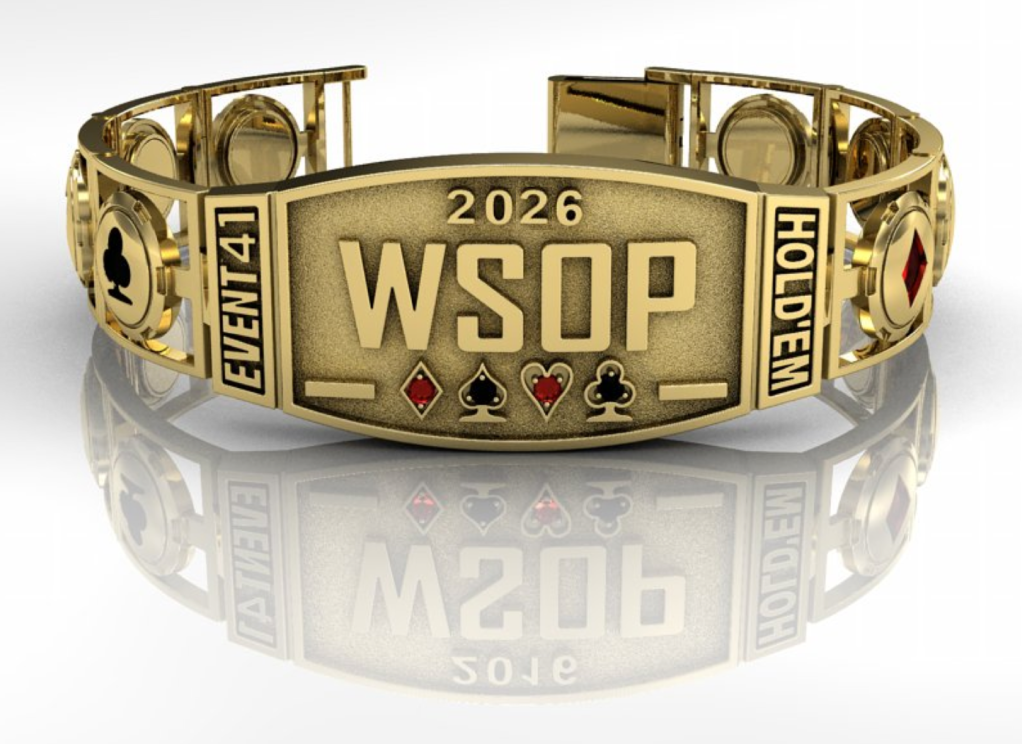
World poker is built on series that combine decades of tradition with staggering prize pools. The main event of the year remains the World Series of Poker (WSOP) — the most prestigious series on the planet, where golden bracelets — the ultimate dream of every pro — are awarded.
Yet Las Vegas’s hegemony has faced a serious challenge in recent years. The WSOP Paradise series, held in the Bahamas, set a record with a $72 million prize pool for the Super Main Event in 2025, becoming the largest guaranteed tournament in history.
Other series are keeping pace. The World Poker Tour (WPT) is known for its televised atmosphere and the Michael Sexton Champions Cup. For lovers of the highest stakes, the Triton Poker Series — a super high‑roller circuit with buy‑ins of hundreds of thousands of dollars — gathers the true elite of world poker.
🏆 Reigning Champions 2025–2026
The start of 2026 has been hot. Global stars continue adding trophies to their collections, while new names make a loud statement.
- WSOP Europe 2025 (Main Event): Daniel Pidun — the German amateur beat a strong field of 659 entrants, winning €1,140,000.
- WPT World Championship 2025: Schuyler Thornton — a sensational victory in Las Vegas, taking $2,258,856.
- Triton Super High Roller Series (2026): Daniel Rezaei — first Triton trophy in Jeju, earning $1,939,000.
- Super High Roller Bowl (2026): Yuri Dzivielevski — the Brazilian phenom dominated mixed games, winning $1,300,000.
👑 Legends & Iconic Names
Poker history cannot be written without legendary names. These players turned a card game into a global sport.
- Phil Hellmuth — 17 WSOP bracelets, the "Poker Brat".
- Phil Ivey — 10 WSOP bracelets, WPT title, the gold standard of skill.
- Doyle Brunson — "The Godfather of Poker", two‑time WSOP Main Event champion, legendary 10‑2 hand.
- Daniel Negreanu — "Kid Poker", over $51 million in live tournament earnings.
- Chris Moneymaker — the "Moneymaker effect", sparked the 2003 poker boom.
- Robert Shuptrine — car salesman, WSOP Circuit winner 2026: "Kids. Life. Family. Now I'm back."
🎲 Fact of the decade: Super high rollers Triton and the record prize fund WSOP Paradise ($72 million) changed the landscape of world poker. And the WSOP gold bracelet still remains the holy grail for every professional and amateur.
♠️ Poker Equity Calculator ♥️
Your essential tool to evaluate winning probabilities in poker
A poker equity calculator is a tool that computes the win probability (equity) of a hand or a range of hands in Texas Hold'em, Omaha, or other poker variants. It helps players understand how strong their current holding is against an opponent’s range at any street (preflop, flop, turn, river).
📊 Equity — the average share of the pot your hand expects to win in the long run, considering all possible unseen cards.
⚙️ How it works
Calculation principle: The calculator runs all possible scenarios until showdown.
- Enter your own hole cards (e.g., A♥K♥).
- Define opponent’s range (e.g., pocket pairs 99+, AJo+, ATs+).
- The tool enumerates all possible board runouts and opponent card combinations (using Monte Carlo simulation or full enumeration).
- For each scenario, the winner is determined.
- The percentages of wins, splits, and losses are calculated — that's your equity.
📈 Sample result:
Your equity = 62.5%
Opponent equity = 37.5%
Your equity = 62.5%
Opponent equity = 37.5%
🎯 Key features
🃏 Hand input
Select two cards (Hold’em) or four cards (Omaha). Suits and ranks are fully supported.
📊 Opponent range
Input any combination (AA, AKs, 76s+) via text or visual grid selection.
🃟 Street selection
Calculate equity preflop, on the flop (with specific board cards), turn, or river.
🔢 Outs & draws
Many calculators show your chance to improve (flush draws, straight draws).
🚫 Dead cards
Exclude cards that are already out of play (folded or exposed).
⚖️ Split probability
Separate statistic for tie hands — when both hands are equal.
📈 Equity distribution graph
Visual representation of how often you win the whole pot, half, or lose.
♣️ Practical example
Situation: Preflop, you hold K♠Q♠. You believe your opponent’s range is: 22+, AJo+, ATs+, KQs.
The equity calculator shows:
🃟 Your equity: 43%
🃟 Opponent equity: 57%
🃟 Opponent equity: 57%
Takeaway: You are a slight underdog — calling preflop requires good pot odds and implied odds.
🧮 Types of poker equity calculators
| Category / Tool | Key characteristics |
|---|---|
| Online calculators (Equilab, CardPlayer, PokerNews) | Quick hand analysis, user-friendly range editor, ideal for spot checks. |
| Desktop software (PokerStove, GTO+, Flopzilla) | Powerful range vs. range analysis, advanced filtering, flop distribution stats. |
| Integrated HUD / Trackers (PokerTracker, Hold’em Manager) | Real-time equity display during play (where permitted by poker rooms). |
⚠️ Important limitations
- Calculators show variance-neutral probability — they don't account for opponent tendencies, bet sizing, position, or bluff frequencies.
- Real equity in a hand depends on which hands your opponent takes to showdown — against aggressive players your equity might be lower than the raw calculation suggests.
- In Omaha, the huge number of card combinations often requires Monte Carlo simulation (full enumeration is computationally heavy).
🎯 Why every poker player needs an equity calculator
Assess hand strength before facing a bet
Know which ranges are profitable to shove/call
Analyze complex hands after the session (post-mortem)
Develop intuition for equity in live & online games
💡 Real impact: how equity changes your decisions
Suppose you hold 5♦6♦ on a flop of 7♦8♦K♣. You have a flush draw + open-ended straight draw. A calculator against a top-pair range (KQ, KJ) will show equity around 55–60%. With that knowledge, you can aggressively semi-bluff or check-raise, extracting value from your equity edge.
📌 Regularly using an equity calculator sharpens your poker intuition — even at live tables, you'll make better decisions.
🧠 Equity + pot odds = winning math
Advanced players compare their hand equity with pot odds. If your equity is higher than the percentage of the pot you need to call, the call is mathematically justified. An equity calculator helps you validate these scenarios and build a solid strategy.
Frequently asked questions
What is Casino affiliate program?
Lorem ipsum dolor sit amet, consectetur adipiscing elit. Phasellus lobortis vulputate elit quis consectetur. Duis sodales ut orci eget condimentum. Aenean tempor magna et tortor congue, ut volutpat felis efficitur. Pellentesque eu libero rhoncus, pharetra velit vel, eleifend dolor.
Do I need a website to join Casino partners?
Lorem ipsum dolor sit amet, consectetur adipiscing elit. Phasellus lobortis vulputate elit quis consectetur. Duis sodales ut orci eget condimentum. Aenean tempor magna et tortor congue, ut volutpat felis efficitur. Pellentesque eu libero rhoncus, pharetra velit vel, eleifend dolor.
How do I sign up?
Lorem ipsum dolor sit amet, consectetur adipiscing elit. Phasellus lobortis vulputate elit quis consectetur. Duis sodales ut orci eget condimentum. Aenean tempor magna et tortor congue, ut volutpat felis efficitur. Pellentesque eu libero rhoncus, pharetra velit vel, eleifend dolor.
How long does it take to register?
Lorem ipsum dolor sit amet, consectetur adipiscing elit. Phasellus lobortis vulputate elit quis consectetur. Duis sodales ut orci eget condimentum. Aenean tempor magna et tortor congue, ut volutpat felis efficitur. Pellentesque eu libero rhoncus, pharetra velit vel, eleifend dolor.
What commissions does Casino partners offers?
Lorem ipsum dolor sit amet, consectetur adipiscing elit. Phasellus lobortis vulputate elit quis consectetur. Duis sodales ut orci eget condimentum. Aenean tempor magna et tortor congue, ut volutpat felis efficitur. Pellentesque eu libero rhoncus, pharetra velit vel, eleifend dolor.
When do I get paid?
Lorem ipsum dolor sit amet, consectetur adipiscing elit. Phasellus lobortis vulputate elit quis consectetur. Duis sodales ut orci eget condimentum. Aenean tempor magna et tortor congue, ut volutpat felis efficitur. Pellentesque eu libero rhoncus, pharetra velit vel, eleifend dolor.
What should I do if my account shows negative net earnings?
Lorem ipsum dolor sit amet, consectetur adipiscing elit. Phasellus lobortis vulputate elit quis consectetur. Duis sodales ut orci eget condimentum. Aenean tempor magna et tortor congue, ut volutpat felis efficitur. Pellentesque eu libero rhoncus, pharetra velit vel, eleifend dolor.
Contact Us
Contact us if you have any questions. We'd be happy to hear from you!